
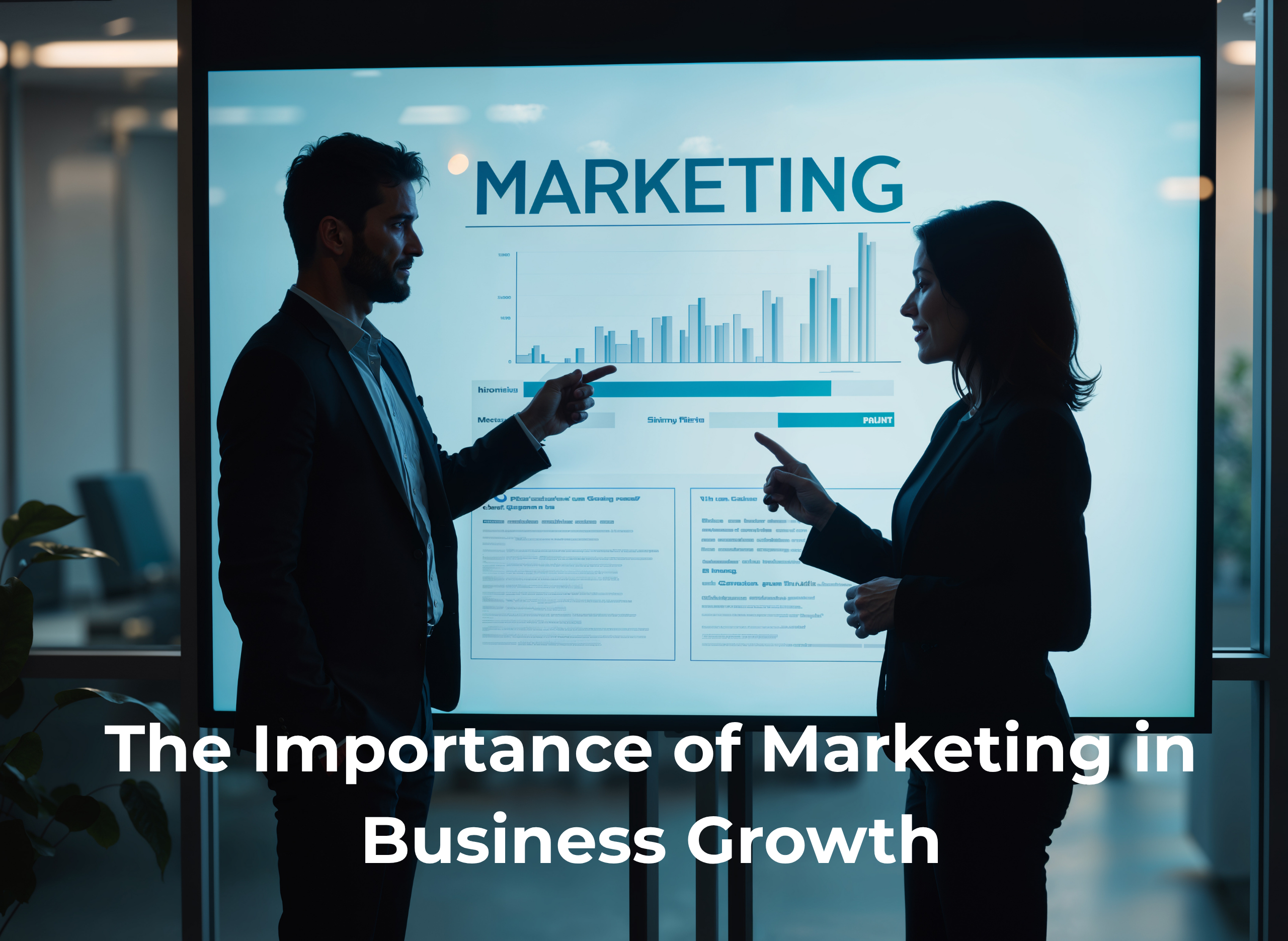
essentially marketing may be interpreted incorrectly as just selling or advertising; in fact forms the basis of the long-term business growth. It determines relationships, produces long-term value, and links a business’s goods and services with the appropriate market. Effective marketing is crucial for survival and growth in today’s cutthroat and rapidly evolving market. essentially marketing is about recognizing what customers need and providing solutions that outperform those of competitors. Companies that spend money on market research learn about the trends, preferences, and behavior of their customers. With this information, businesses can create goods and services that genuinely appeal to their target market. Even the greatest products could fail in the absence of marketing if prospective buyers are not aware of their existence or worth. Beyond its traditional positions marketing acts as a connection between the objectives of a business and its customers genuine expectations. Every successful business starts with an idea, but marketing is what becomes that idea into a tangible value that consumers can comprehend, trust, and afford. Even innovative businesses find it difficult to succeed without this translation. The capacity of marketing to establish emotional connections is a crucial aspect of business expansion. Consumers today purchase experiences, narratives, and ideals in addition to goods. Marketing humanizes a business through branding, consistent messaging, and storytelling. It provides a reason for consumers to connect with a business that passes beyond features or cost. A business’s positioning within its industry is also carefully affected by marketing. A brand’s positioning determines how it appears related to its adversaries, including whether it is thought to be affordable, high-end, inventive, or customer-focused. The consistency and alignment of all marketing initiatives are guaranteed by a clearly defined positioning strategy. Customers can quickly grasp the business’s values because of to this clarity, which reduces confusion and boosts conversion rates. Demand creation is one of marketing’s other key donations. While some companies rely on pre-existing demand, high-growth businesses frequently produce demand where none previously existed. This is accomplished by informing clients, drawing attention to issues they might not have known about, and effectively offering solutions. In addition, advertising enhances customer lifetime value (CLV), an essential gauge of long-term success. Effective marketing strategies seek to maximize the value obtained from current customers rather than focusing only on attracting new ones. This covers loyalty programs, cross-selling, upselling, and tailored communications. Businesses will produce predictable and consistent revenue streams by improving repeat business and encouraging deeper connections. Data-driven decision-making is further backed by marketing. Businesses can now measure campaign performance, track customer journeys, and pinpoint areas for improvement thanks to the establishment of analytics tools. By using a data-centric approach, businesses can allocate resources more efficiently and reduce guesswork. Due to this, businesses are capable to improve their strategies over time. Additionally, advertising facilitates scalability. As a business grows, it requires systems and strategies that can manage increasing complexity and demand. Marketing frameworks such as digital platforms, automated campaigns, and customer segmentation can help businesses reach their target audience. This guarantees rapid growth that is also sustainable and controllable. Two more important responsibilities for marketing are crisis management and brand recovery. During times of negative publicity or market issues, marketing helps to direct the narrative and recover trust. Rebuilding confidence with stakeholders and customers can be accomplished by open communication, timely responses, and consistent messaging. In the end, marketing develops long-term vision and direction. Establishing quick sales is not as important as determining a lasting presence in the market.

Today, entrepreneurship is marked by adaptability instead of size, investment, or even industry. The most successful entrepreneurs are those who know trends thoroughly and use them strategically instead of those who follow them mindlessly. Recognizing the changes affecting the business world is crucial for long-term success as markets modify faster than before. 1. Determine speed over precision The change from perfection to speed is one of most major changes in contemporary business. Nowadays, entrepreneurs don’t wait to develop the “ideal” product before releasing it. Rather, they are embracing the idea of rapid execution—start quickly, pick things up quickly, and keep getting better. Businesses can respond to actual customer feedback and remain relevant with this strategy. 2. Branding Based on Trust Today’s consumers bought trust in addition to products. Strong brands are increasingly built on transparency, authenticity, and honesty. Businesses that are honest about their values, methods, and even mistakes gained dedicated customers. Instead of focusing just on transactions, entrepreneurs want to build relationships. Long-term growth, referrals, and customer loyalty are all generated by a trusted brand. 3. Niche Micro-Markets Successful businesses are currently focusing on micro-niches instead of many people. These are very specialized groups with specific needs and tastes. Entrepreneurs can stand out and establish authority more quickly by responding to a smaller but more focused audience. For instance, emphasizing on “fitness for remote workers” or “home workouts for beginners” can have a greater impact than launching a general fitness brand. 4. Experience-Based Businesses Products are no longer enough on themselves. More than what a business sells, customers remember how it makes them feel. Experience-driven businesses have expanded as an outcome of this. Every interaction is important, from interactive services to specific onboarding. For the purpose to keep customers interested and concerned, entrepreneurs should create memorable experiences rather than just products. 5. Self-Sufficient Digital Ownership Relying solely on third-party platforms has grown less common among entrepreneurs. Businesses are now concentrating on owning their audience through email lists, websites, and private communities, even though social media is still important. Stability and control are guaranteed by this change. Although platforms may alter their algorithms, direct customer relationships continue to be a valuable resource.

